Best AI Rank Trackers: Track Rankings in ChatGPT, Perplexity and AI Overviews

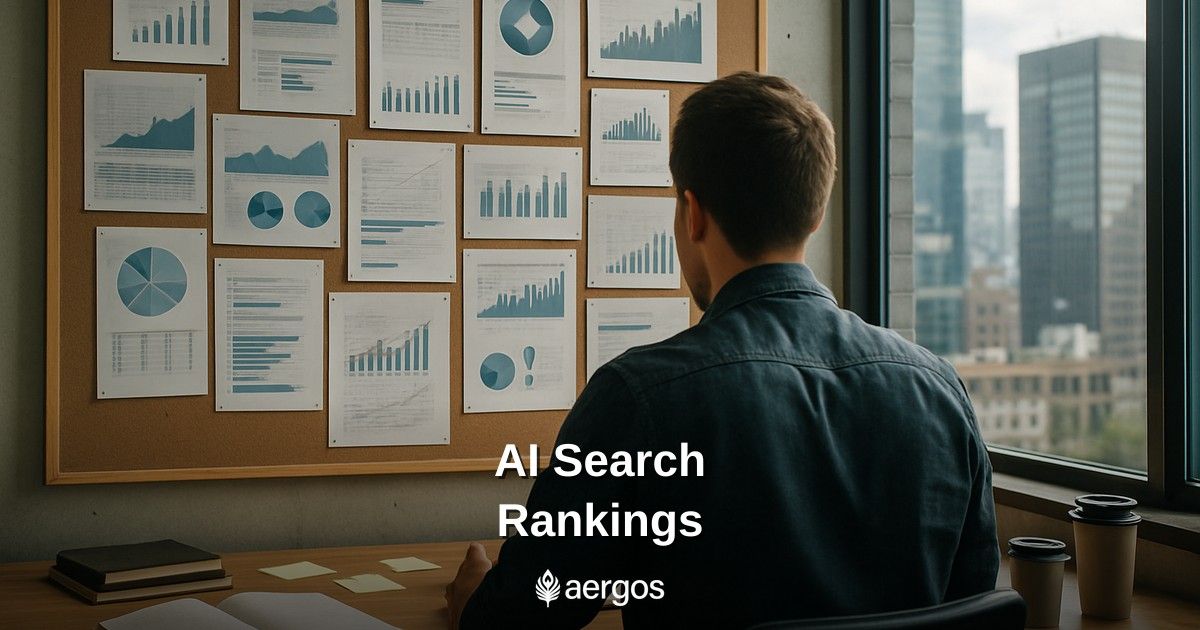
Picture this: your Google rankings look fine. Stable top-five positions on your core terms. Then a client asks, "Why aren't we showing up when people ask ChatGPT about our category?" You open a new chat, type the question yourself, and your client isn't mentioned once. Three competitors are. That's the gap a good ai rank tracker exists to close — and it's a gap that traditional rank tracking tools were never built to see.
This guide breaks down how AI rank tracking actually works, why it's different from classic position tracking, and which tools are worth your time in 2025. We evaluated seven platforms across engines covered, depth of SEO plus AI visibility together, reporting, and pricing model.
How AI Rank Tracking Differs From Classic SEO Rank Tracking
Classic rank tracking is straightforward. You give the tool a keyword, it checks where your URL sits in Google's results, and it logs that position over time. The signal is binary in a useful way: you're either in the top 10 or you're not.
AI search doesn't work that way. There's no blue link at position four. There's a generated answer — and your brand is either cited in that answer or it isn't. The question isn't "what position am I?" The question is "does this AI even know I exist, and does it recommend me?"
That creates three core differences you need to understand before picking a tool.
Prompts vs. Keywords
You optimize classic SEO for keywords. You optimize for AI search with prompts — full conversational questions the way a real user would type them into ChatGPT or Perplexity. "Best project management software for agencies" performs very differently across AI engines than the stripped-down keyword "project management software." A good AI rank tracker lets you define those prompts and monitor citation frequency over time.
Citations vs. Blue Links
The metric you care about shifts from position to mention rate. Was your brand cited in the answer? Was it cited positively or neutrally? Was it cited with a source link? Some tools go deeper and track sentiment, share of voice against named competitors, and whether you appear in the follow-up recommendations.
Per-Engine Variance
ChatGPT, Perplexity, Google AI Overviews, Gemini, and Claude each pull from different sources and weight authority differently. I've seen brands rank prominently in Perplexity but go completely unmentioned in AI Overviews for the same prompt. That variance matters. Any tool worth paying for tracks across multiple engines — not just one.
How We Evaluated These Tools
We looked at seven platforms through five lenses:
- Engines covered — ChatGPT, Perplexity, Gemini, Claude, Google AI Overviews, or a subset
- SEO + GEO together — does the tool track classic Google rankings alongside AI citations, or is it a point solution for one or the other?
- Reporting and white-label — can agencies deliver this data to clients under their own brand?
- Execution vs. monitoring-only — does it help you act on what it finds, or just surface the data?
- Pricing model — per seat, per keyword, flat monthly, or usage-based?
The 7 Best AI Rank Tracker Tools
1. Aergos
Aergos is our platform, so take the placement with that in mind — here's exactly what it does and doesn't do.
Aergos is built around one premise: classic SEO and AI visibility belong in the same workflow, not two separate tools. On the AI side, it monitors brand citations across ChatGPT, Perplexity, Gemini, Claude, and Google AI Overviews. You define your prompts, set your competitors, and track how often each AI engine mentions your brand versus the field — that's your AI share of voice, tracked over time.
On the classic side, it does standard rank tracking for Google and Bing positions. The technical SEO crawl layer includes AI-readiness checks — robots.txt, sitemap.xml, llms.txt, and Core Web Vitals — so you can see whether your site is even accessible to the crawlers AI engines rely on. The competitor AI-citation gap analysis shows you which prompts your competitors are winning that you're not.
For agencies, Aergos includes white-label client reports and a branded client portal, all on flat monthly pricing with no per-seat fees. There's also an MCP server integration, so you can drive Aergos directly from Claude, Cursor, or any MCP-compatible agent. Where it's not the right fit: if you only need deep-dive AI citation monitoring with no interest in traditional SEO, a pure-play GEO tool may feel more focused.
Best for: Agencies and in-house teams who want classic SEO rank tracking and AI visibility in a single platform without paying per seat.
2. Profound
Profound is one of the earliest purpose-built platforms for what's now called Generative Engine Optimization. It positions itself as an enterprise solution, with a focus on tracking brand mentions and sentiment across AI-generated answers at scale.
Its standout strength is depth of analysis on individual prompts — sentiment scoring, citation source analysis, and share-of-voice comparisons against specific competitors. The platform is clearly built for larger marketing teams that want structured reporting on AI visibility as a standalone discipline.
Best for: Enterprise brands and larger in-house teams who need detailed AI citation reporting and have the budget for a dedicated GEO analytics layer.
3. Peec AI
Peec AI focuses on AI search visibility tracking with an emphasis on prompt-level monitoring across multiple LLMs. It tracks which sources the AI engines are citing when your category prompt fires — which gives you actionable intelligence on where you need to build authority (publications, review sites, industry directories).
The interface is relatively clean and approachable for teams newer to GEO. It's a monitoring-first tool rather than an execution platform, but the visibility data it surfaces is genuinely useful for content and digital PR strategy.
Best for: Mid-market teams that want clear AI visibility data to inform their content and link-building decisions.
4. Otterly.AI
Otterly.AI pitches itself as an AI search monitoring platform with a strong emphasis on share of voice across conversational search engines. It covers ChatGPT, Perplexity, and Google's AI Overviews, and it's built to help brands understand whether their visibility is growing or shrinking as generative search handles more queries.
One thing I like about Otterly's approach is that it tracks competitor mentions alongside your own — so you're not just watching your own numbers in isolation. You see the whole competitive landscape for a given prompt set. The reporting exports are clean, which helps if you're pulling this into client decks manually.
Best for: Brands and agencies that want competitive share-of-voice tracking across AI engines without a heavy enterprise contract.
5. Scrunch AI
Scrunch AI approaches GEO tracking from a content intelligence angle. Beyond just tracking whether you're cited, it digs into what content formats and source types the AI engines are pulling from — so you can reverse-engineer what's working for your competitors who are getting cited.
If your team is frustrated by the "we're not being cited" problem and you want tactical answers rather than just dashboards, Scrunch AI is worth a look. It skews toward content strategy execution rather than pure monitoring.
Best for: Content-driven teams who want to understand the "why" behind AI citation gaps and act on that data directly.
6. SE Ranking AI Overview Tracker
SE Ranking is a well-established SEO platform that has added AI Overview tracking as part of its feature set. According to their site, it monitors when Google's AI Overviews appear for your tracked keywords and whether your site is cited inside them.
The advantage here is that if you're already using SE Ranking for classic rank tracking, you get AI Overview visibility without migrating to another tool. The limitation is that it focuses primarily on Google's AI Overviews — if you need cross-engine monitoring (ChatGPT, Perplexity, Claude), you'll need to supplement.
Best for: Existing SE Ranking users who want to add AI Overview monitoring without switching platforms.
7. Semrush AI Toolkit
Semrush needs no introduction on the classic SEO side. Their AI Toolkit — which includes features like the AI Narratives report — extends the platform into monitoring how brands appear in AI-generated content. It's built into the broader Semrush ecosystem, so if your team is already running research, audits, and rank tracking there, the AI layer slots in without a new login.
The tradeoff is that Semrush's AI features are newer and still maturing compared to pure-play GEO tools. If AI citation monitoring is your primary need, a purpose-built platform will likely give you more depth. But as a feature layer on top of a platform you're already paying for, it's a reasonable place to start.
Best for: Teams already invested in the Semrush ecosystem who want to add AI visibility monitoring without a new vendor.
How to Choose the Right AI Rank Tracker
The right tool depends almost entirely on what you're trying to accomplish and who you're reporting to.
If you run an SEO agency
You need both classic rank tracking and AI citation monitoring in one place — because your clients expect a unified view of their search presence. Switching between two dashboards to build one report kills your margin. Look for white-label reporting, flat pricing that doesn't blow up when you add clients, and multi-engine AI coverage. Aergos was specifically designed for this workflow.
If you're an in-house marketer at a mid-to-large brand
Your priority is competitive intelligence. You want to know which AI engines are recommending your competitors over you, and which prompts are the highest-value targets to fix. Profound, Otterly, and Peec AI all do a strong job here. If you're already a Semrush or SE Ranking shop, their native AI features are worth evaluating first before adding another subscription.
If you're an SMB owner doing your own SEO
Start with Google AI Overviews — that's where the traffic impact is most immediate for local and SMB queries. You don't need an enterprise GEO platform yet. A tool that covers AI Overviews alongside your classic rankings will tell you what you need to know. As your AI search visibility strategy matures, you can layer in multi-engine monitoring.
A Note on the Data: AI Citation Tracking Is Still Maturing
I want to be honest with you here. AI rank tracking is a newer category and the measurement methodologies are still evolving. Unlike classic rank tracking — where Google's results are relatively stable for a given query — LLM outputs vary by session, model version, and even the time of day the prompt fires. According to research from Profound on AI answer variability, the same prompt can return meaningfully different brand citations across multiple runs.
That doesn't mean the data is useless. Trend direction and share-of-voice over time are still actionable signals. But be skeptical of any tool claiming perfect, deterministic AI position tracking. The best tools are transparent about their methodology — how many prompt runs they average, which model versions they're querying, and how often they refresh.
The SparkToro and Datos study on AI search traffic is a useful reality check on how much traffic AI search is actually driving today versus traditional Google — and it's worth reading before you over-invest in GEO at the expense of your core SEO foundation.
Where to Start
Here's the honest sequence I'd recommend, regardless of which tool you pick:
- Define your 10 to 20 most important category prompts — the questions your buyers are actually typing into AI engines. These become your tracking set.
- Run those prompts manually in ChatGPT, Perplexity, and Google AI Overviews right now. Note who's being cited and who isn't. This gives you a baseline before you spend anything.
- Check whether your site has an llms.txt file and whether your robots.txt is blocking any AI crawlers. Technical access is the foundation — no GEO strategy works if the AI can't read your content.
- Pick one tool from this list that matches your reporting needs and budget. Start with a trial if one is available. Commit to 60 to 90 days of tracking before drawing conclusions.
- Prioritize citation gaps where a competitor is consistently mentioned and you aren't. That's your GEO content brief.
AI search visibility is not replacing classic SEO — it's sitting on top of it. The brands winning in ChatGPT and Perplexity today are almost always the same brands with strong organic authority. Build the foundation right, then layer in AI tracking to see where the gaps are opening up.
If you want a single platform that handles both sides of that equation — traditional rank tracking plus AI citation monitoring across five engines — explore what Aergos tracks and see if it fits your workflow.
Frequently Asked Questions
Related Articles
Glossary terms in this article
Brush up on the definitions.
Content produced by AI language models, subject to Google's quality standards regardless of production method — quality and helpfulness determine ranking, not the tool used.
Monitoring where and how often a brand or piece of content is cited across the web, AI systems, and social channels — a key metric for AI search visibility and brand authority.
The planning, development, and management of content to achieve specific business goals across all channels and formats.
Google's set of user experience metrics—LCP, INP, and CLS—that measure loading speed, interactivity, and visual stability.
The ongoing monitoring of a website's search engine rankings for specific keywords over time to measure SEO performance.
The percentage of industry conversations, mentions, or advertising impressions captured by your brand relative to competitors.
About Matt Weitzman
Senior SEO Strategist & Co-Founder
Matt has over 15 years of experience in technical SEO and digital marketing. He specializes in algorithmic recovery, enterprise architecture, and leveraging AI for content scaling. He is a frequent speaker at search marketing conferences.
More articles by Matt Weitzman