Google Home Speaker Review: Great Hardware, Unfinished Gemini

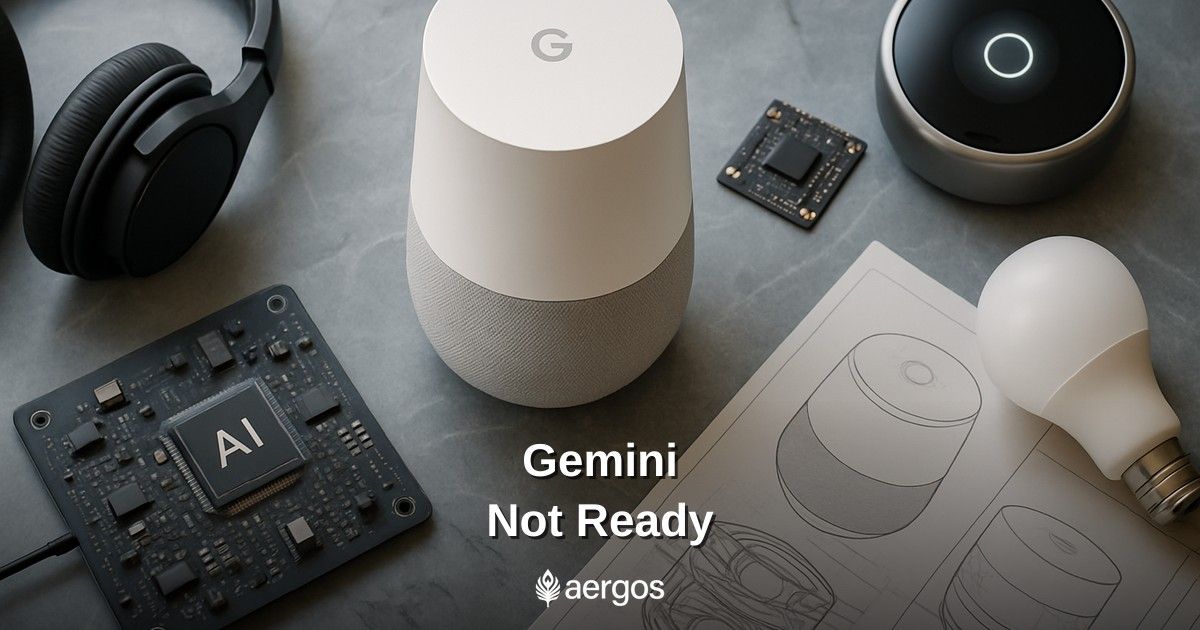
Google launched the Google Home Speaker on July 1, 2026 — its first new smart speaker in six years and the first device the company describes as 'built for Gemini.' Priced at $99.99, the speaker arrives as Google tries to reclaim relevance in a smart home market it helped pioneer and then largely neglected. According to Google built a great smart speaker, but Gemini isn't ready for it, senior reviewer Jennifer Pattison Tuohy found the hardware genuinely impressive but Gemini for Home 'unfinished' after five days of hands-on testing.
The launch puts Google squarely in competition with Amazon's revamped Alexa hardware, which debuted last fall. The race to power the home with a capable AI assistant is real. But based on The Verge's review, Google still has ground to cover before Gemini can match what Alexa Plus is already delivering in practice.
The Details: What Google Actually Shipped
At $99.99, the Google Home Speaker is a physically small device — roughly the size of a softball, according to the review — that comes in four colors: jade, berry, hazel, and porcelain. It features a single full-range driver (58mm), three far-field microphones, a neural processing unit for background noise handling, dual-band Wi-Fi 6, Bluetooth 5.4, and Thread 1.3 border router support. It can also pair with the Google TV Streamer as an audio output, a first for Google Home audio speakers.
The reviewer noted the Home Speaker doesn't sound quite as good as the older Nest Audio it replaces — the Nest Audio had a woofer and tweeter, while this model runs a single driver with noticeably thinner bass. Against the $99.99 Amazon Echo Dot Max and the $129 Apple HomePod Mini, Tuohy ranked it third on audio quality. That said, she found the design to be her personal favorite of the three.
The speaker carries a starting subscription price of $10 per month for Google Home Premium, with up to a six-month free trial included. Several features — including Gemini Live — sit behind that paywall. Gemini Live extends the assistant's conversational window and retains context between chats, but it cannot take smart home actions on its own; it defers those back to Gemini for Home.
One detail worth flagging for anyone thinking about setup: the power cable uses USB-C at the wall brick but is not removable from the speaker itself. If the cable frays or you need a longer run, you're stuck. No color-matched cable is included either — something both Apple and Amazon offer on their competing devices.
What This Means For You: AI Assistants and the Trust Problem
Picture this: you're mid-cook, hands covered in flour, and you ask your smart speaker a simple follow-up question about the recipe you were just discussing. It tells you it can't answer until it verifies your voice. That's the experience The Verge's reviewer described happening 'fairly regularly' with Gemini for Home — even with Voice Match already configured. That's not a minor inconvenience. That's a trust problem.
And trust is exactly what AI assistants live or die by. The reviewer's most damning example: she asked Gemini to play 'La Noche de Anoche,' Gemini announced the correct title, then played an entirely different song. When corrected, it played yet another wrong song. When asked about voice options for the speaker, Gemini insisted none existed — then appeared to hallucinate a list of voice names including 'Dimitrix,' 'Impetus,' 'Cameo,' and 'Russell Gethy' on a different device. The actual Gemini for Home voices are named after plants.
Speed is the other issue. Complex multi-step commands — turn off one room, adjust the thermostat, turn on lights in another — took Gemini around 10 seconds to execute. Alexa Plus completed the same request in under three, according to the review. Even simple local commands like 'Turn on the lights' sometimes lagged close to 10 seconds. For a device built around conversational AI, that pace undercuts the whole value proposition.
Where Gemini genuinely shines is natural language understanding. The reviewer asked it to 'turn down the AC because I don't want to get too hot while cooking' and it understood. She said she thought someone was outside, and it offered to pull up the camera feed and check the locks. These are real improvements over legacy Google Assistant. The problem is that those wins are sandwiched between hallucinations and paywalls — and that inconsistency erodes confidence fast.
For anyone tracking AI search and voice trends, this review is a useful data point. Conversational AI is genuinely better at understanding intent than it was two years ago. The gap is in reliability and speed — two things users don't forgive easily once they've been burned. The assistant that earns daily trust is the one that wins the home.
What to Do Now: How to Think About This as a Marketer
You might be wondering why a smart speaker review belongs on an SEO blog. Fair question. Here's why it matters: voice assistants powered by large language models are increasingly how people ask questions, request information, and interact with brands at home. The assistant's reliability determines whether your content ever gets surfaced in that context.
- Watch the Gemini for Home rollout carefully. The review confirms Gemini for Home already works on older devices like the Nest Audio and Nest Hub — Google isn't limiting its AI features to new hardware. That means the user base for Gemini-powered voice queries is larger than just people buying this new speaker.
- Track AI answer reliability alongside AI visibility. Right now, Gemini hallucinates, loses context mid-conversation, and gets basic factual answers wrong. If you're building a strategy around AI-generated answers citing your brand, reliability on the assistant side matters as much as your content's structure.
- Structure your content for conversational queries. Gemini handled natural language well in the review — 'it's too dark in here' triggered a light adjustment. That same pattern applies to search: your FAQ content, how-to answers, and product descriptions should be written the way a human would actually ask, not how a keyword researcher would phrase it.
- Don't over-invest in voice-specific optimization yet. The assistant landscape is still fragmented and unreliable enough that doubling down on voice SEO alone is premature. Keep your AI visibility tracking broad — cover text-based AI search (ChatGPT, Perplexity, AI Overviews) before going deep on voice.
- Note the paywall dynamic. Google is locking features like Gemini Live behind a $10/month subscription. As AI assistants mature, premium tiers will shape who gets richer interactions. That's worth watching for what it means about monetization of AI-driven search surfaces.
Background and Context: A Long Road Back for Google Home
The Google Home Speaker is the company's first new smart speaker in six years, according to The Verge. That six-year gap is meaningful. Google launched the original Google Home in 2016, followed by the Nest Audio in 2020, and then essentially went quiet on hardware while the smart home space kept moving. Amazon continued iterating on Echo devices. Apple launched the HomePod and HomePod Mini. Google let Nest gather dust.
The arrival of capable LLMs gave every tech platform a reason to revisit the voice assistant. Amazon moved first with its revamped Alexa hardware last fall. Google is now responding with Gemini for Home. The pattern here mirrors what we've seen in text-based AI search: the underlying models have gotten dramatically better, but the product layer — the integration, the reliability, the user experience — is still catching up.
I've watched this cycle play out in search more than once. A new capability arrives, the demos are impressive, and then real-world usage reveals the edges. Gemini for Home is at that edge right now. The conversational understanding is genuinely impressive. The execution — speed, consistency, memory — is not there yet. That gap tends to close faster than skeptics expect and slower than enthusiasts hope.
The broader trend is clear: AI is becoming the interface layer for how people interact with information at home, in search, and increasingly across every screen. Whether it's Gemini, Alexa Plus, or something else, the assistant that earns trust by being fast, accurate, and useful most of the time will reshape how users discover content, products, and answers. Keeping an eye on AI answer quality — not just rankings — is becoming a real part of the job. If you want a lightweight way to track how your brand shows up in AI-generated answers, Aergos has a free AI visibility checker worth bookmarking.
Frequently Asked Questions
Related Articles



Glossary terms in this article
Brush up on the definitions.
A clear statement of the specific benefit a product or service delivers to a defined customer, and why it is better than the alternatives.
The extent to which a brand's content is referenced, cited, or surfaced in AI-generated answers from tools like ChatGPT, Gemini, and Perplexity.
Search experiences powered by large language models that generate conversational answers, synthesize information from multiple sources, and reduce reliance on traditional blue-link SERPs.
About Matt Weitzman
Senior SEO Strategist & Co-Founder
Matt has over 15 years of experience in technical SEO and digital marketing. He specializes in algorithmic recovery, enterprise architecture, and leveraging AI for content scaling. He is a frequent speaker at search marketing conferences.
More articles by Matt Weitzman