Ahrefs Brand Radar vs AI Visibility Platforms: Coverage, Gaps, and Alternatives

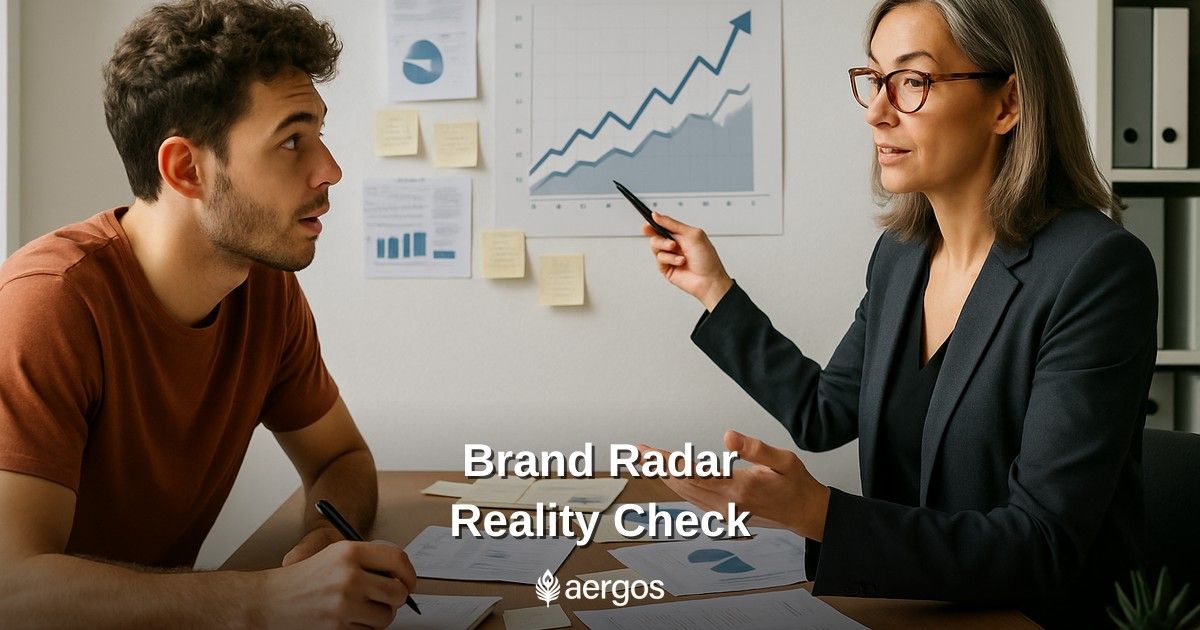
You're already paying for Ahrefs. You love the backlink data. The rank tracker works. And now there's a module called Ahrefs Brand Radar that tracks how your brand shows up in AI-generated answers. Sounds like a no-brainer to just use that, right? Maybe. But the question worth asking before you commit — or before you recommend it to a client — is whether a suite add-on does the same job as a platform built specifically for this problem. This article breaks it down honestly, without the vendor spin.
What Ahrefs Brand Radar Actually Is
Ahrefs Brand Radar is a module inside the Ahrefs platform designed to track brand mentions and visibility within AI-generated answers — including AI Overviews. Ahrefs also offers a free AI visibility checker that gives you a quick snapshot of how a brand is appearing in AI search results. Both tools sit inside (or adjacent to) the classic Ahrefs suite that most SEOs already know.
This makes Ahrefs Brand Radar genuinely useful for anyone who wants to monitor AI visibility without adding another login, another vendor, or another line item to the budget. If you're an in-house SEO or a small agency that lives inside Ahrefs all day, the convenience factor is real.
Ahrefs has a strong reputation for a reason. Their crawl index, keyword data, and backlink database are world-class. Brand Radar is a natural extension of that — applying their data muscle to the AI search visibility problem. That matters.
Who Ahrefs Brand Radar Is a Great Fit For
Not every tool needs to do everything. Here's where Ahrefs Brand Radar genuinely shines.
- Existing Ahrefs subscribers who want baseline AI visibility data without onboarding a new platform.
- In-house SEO teams at single brands who need a quick answer to "are we showing up in AI answers?" and don't need deep multi-engine breakdowns.
- Agencies already consolidating tools who want fewer vendors and are comfortable with suite-level AI tracking.
- SEOs focused primarily on classic signals (backlinks, rankings, site audits) who treat AI visibility as a secondary metric for now.
If that sounds like your situation, Ahrefs Brand Radar is probably worth exploring before you pay for anything else. The convenience of having it inside your existing workflow is a real operational advantage.
Where It May Not Fit Your Needs
Here's where I want to be honest with you, because this is the part vendors usually skip.
Coverage Across AI Engines
The AI search landscape is not just Google AI Overviews anymore. Your clients' customers are asking ChatGPT which vendors to consider. They're using Perplexity to research services. They're getting answers from Gemini and Claude. A suite module built primarily around web crawl data and AI Overviews may not give you prompt-level tracking across all of those surfaces. That gap matters — especially if you're reporting AI visibility to clients who care about the full picture.
Agency White-Label Reporting
Picture this: you're running a monthly reporting call with a client and you want to show them a clean, branded AI visibility report — not a screenshot from your Ahrefs account. Suite tools are generally built for internal use, not client-facing white-label deliverables. That's not a flaw in Ahrefs; it's just a different design goal. But for agencies, it creates a real workflow problem.
The Execution Loop
Monitoring is only half the job. Once you know your brand isn't showing up in a ChatGPT answer about your category, what do you do about it? I've seen a lot of teams get stuck here — great data, no clear path from insight to action. Dedicated AI visibility platforms tend to pair monitoring with content briefs, schema recommendations, and citation-gap analysis because that's literally all they do. A suite module has to share roadmap priority with backlink analysis, keyword research, and a dozen other features.
Prompt-Level Granularity
Which specific prompts is your brand appearing in — or losing — compared to a competitor? That question is hard to answer without a tool built to run structured queries across AI engines and track citation patterns at the prompt level. That kind of granularity is table stakes for dedicated AI visibility platforms, and it's a legitimate gap to explore before you assume Brand Radar covers it for your use case.
Top Alternatives to Ahrefs Brand Radar
If the gaps above resonate, here are the tools most worth evaluating. All of them approach AI visibility differently — so the right fit depends on what you actually need.
Aergos (Disclosure: This Is Our Platform)
Aergos is built as a single platform for both classic SEO and AI search visibility. That means rank tracking and brand-citation monitoring across ChatGPT, Perplexity, Gemini, Claude, and Google AI Overviews — not one or the other. The technical crawl includes AI-search-readiness checks (robots.txt, sitemap.xml, llms.txt, Core Web Vitals), which matters more than most people realize for getting cited in generative answers.
For agencies specifically, white-label SEO reports and a branded client portal are core parts of the product — not an afterthought. The Content Studio handles briefs, drafts, and on-page copy, so there's a path from "you're not being cited" to "here's what to publish to fix that." Competitor insight includes AI-citation gap analysis: you can see which prompts your competitors are winning that you're not. Pricing is flat monthly with no per-seat fees, which tends to matter at the agency level.
Aergos also ships an MCP server, so you can drive the platform directly from Claude, Cursor, or any MCP-compatible agent — useful if your team is building AI-assisted workflows. You can try the free AI visibility checker to see where your brand stands before committing to anything.
Profound
Profound positions itself as an enterprise-focused AI visibility platform. It's built for tracking brand presence across AI engines at scale, with a focus on structured monitoring and reporting. If you're at a large brand or enterprise agency with significant budget and a need for deep attribution data, Profound is worth putting on your shortlist. It's more of a dedicated monitoring layer than an execution platform, so pair it with your existing content workflow.
Peec AI
Peec AI focuses specifically on AI engine visibility tracking — monitoring how brands appear in answers from ChatGPT, Perplexity, and similar surfaces. It's a leaner, more focused tool compared to full-suite options. That can be a good thing if all you need is clean monitoring data without the overhead of a broader platform. Worth evaluating if your primary need is visibility tracking without the reporting and content execution layer.
How to Decide: An Honest Evaluation Checklist
Before you commit to any of these tools, run through these questions. Your answers will tell you more than any feature comparison table.
- Do you need multi-engine coverage? If you only care about Google AI Overviews, a suite module may be enough. If you need ChatGPT, Perplexity, Gemini, and Claude tracked simultaneously, go dedicated.
- Do you need white-label client reports? If you're an agency delivering AI visibility reporting under your own brand, make sure that capability exists before you sign up.
- Is monitoring enough, or do you need an execution path? Monitoring tells you there's a problem. A content studio and citation-gap analysis help you fix it. Know which one you need.
- How many AI engines are your clients' customers actually using? Ask them. The answer might surprise you — and it should drive your coverage requirements.
- What's your per-seat cost sensitivity? Ahrefs is per-seat. Some dedicated platforms are per-seat. Flat monthly pricing changes the math significantly as your team or client roster grows.
- Do you want everything in one platform? If Ahrefs is your source of truth for classic SEO, adding a second platform creates data reconciliation work. That overhead is real — factor it in.
The Honest Verdict
Ahrefs Brand Radar is a legitimate tool from a company that has earned serious trust in the SEO industry. If you're already deep in the Ahrefs ecosystem and want a first look at AI visibility data without adding new vendors, start there. It's not a bad choice — it's just a specific choice.
Where it gets complicated is when your needs outgrow suite-level monitoring. Agencies that need white-label reporting, teams that need prompt-level tracking across five AI engines, and anyone who needs a direct line from visibility gap to published content — those use cases push toward dedicated platforms. Not because Ahrefs is doing something wrong, but because fit matters more than brand loyalty.
According to BrightEdge's AI search research, generative AI is now influencing a significant and growing share of search sessions. The question isn't whether to track AI visibility — it's whether your current tools give you the coverage and execution path to do something about what you find.
Choose the tool that matches your actual workflow, not the one with the most impressive feature list. Those two things are rarely the same.
Where to Start
Here's a simple starting point regardless of which tool you pick:
- Run a baseline AI visibility check on your brand today — use Ahrefs' free tool, Aergos' free checker, or any dedicated tool's trial. Get a number before you do anything else.
- List the five AI engines where your clients' customers are most likely to ask about your category. That list tells you your minimum coverage requirement.
- Check whether your current tool tracks mentions at the prompt level or just at the domain/brand level. There's a meaningful difference.
- Audit your reporting workflow: are you manually screenshotting data to send to clients? If yes, that's the operational pain a white-label reporting layer fixes.
- Pick one client account and run a competitor citation-gap analysis. Find one prompt where a competitor is cited and you're not — then reverse-engineer why.
The AI visibility space is moving fast. I've watched conferences like BrightonSEO and SMX shift from "should we care about this?" to "how do we measure and act on it?" in less than two years. You don't need to have the perfect stack on day one. But you do need to start measuring now so you have a baseline when it matters most.
Aergos is built specifically for this — classic SEO and AI visibility in one platform, with the agency reporting layer baked in. If that sounds like the right fit, explore what Aergos can do and see how it compares to what you're working with today.
Frequently Asked Questions
Related Articles
Glossary terms in this article
Brush up on the definitions.
The process of identifying the search terms your target audience uses to find information, products, or services relevant to your business.
Google's set of user experience metrics—LCP, INP, and CLS—that measure loading speed, interactivity, and visual stability.
A brand health metric measuring a brand's proportion of total organic search queries for its category, used as a leading indicator of market share.
The extent to which a brand's content is referenced, cited, or surfaced in AI-generated answers from tools like ChatGPT, Gemini, and Perplexity.
Instances where a brand's name is referenced online—in content, forums, social media, or press—whether or not accompanied by a link.
AI systems that create original content—text, images, audio, or code—by learning patterns from training data.
About Matt Weitzman
Senior SEO Strategist & Co-Founder
Matt has over 15 years of experience in technical SEO and digital marketing. He specializes in algorithmic recovery, enterprise architecture, and leveraging AI for content scaling. He is a frequent speaker at search marketing conferences.
More articles by Matt Weitzman