Florida Wants a Judge to Stop ChatGPT From Acting Human

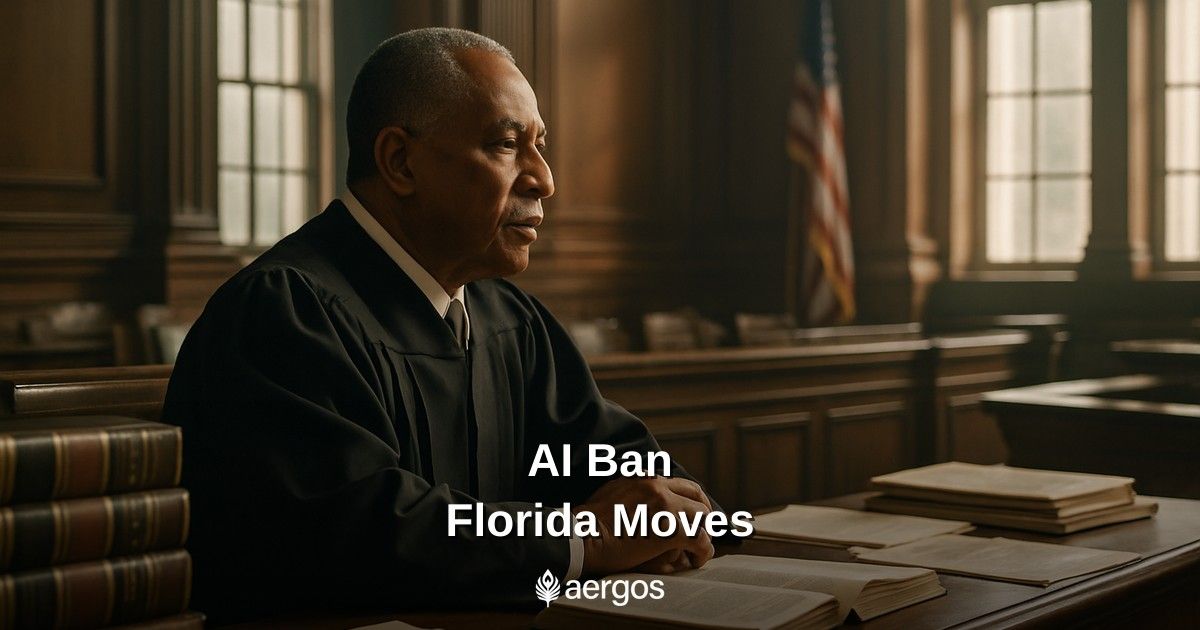
Florida Attorney General James Uthmeier filed a motion asking a court to block OpenAI from what he calls "giving ChatGPT false human attributes," according to a report from The Verge. The filing, reported by The Verge on September 28, 2026, comes a few months after Florida first sued OpenAI over safety concerns and marks a significant escalation in state-level legal action against AI companies, which already face suits like a lawsuit over a ChatGPT-fueled suicide attempt.
Uthmeier's argument is direct: ChatGPT's use of first-person pronouns and emotion-mimicking language "deceptively suggests to users that it is a trustworthy 'friend,'" in his words. He claims this manufactured sense of trust is engineered to increase engagement and feed OpenAI's training pipeline, making users more reliant on a product that, by his account, becomes less trustworthy the more it chases engagement.
OpenAI spokesperson Drew Pusateri responded to The Verge, saying the company had already paused training its most capable models and would only resume "when we are confident that we have additional safeguards in place." Pusateri added that OpenAI is "committed to working with Florida and other states on advancing pragmatic AI policies that apply to the entire AI industry, not just one company."
The Details: What Florida Is Actually Asking For
This isn't just a request to slap a disclaimer on ChatGPT's homepage. Uthmeier is asking a judge to prohibit OpenAI from developing new AI models without "third-party approved safety guardrails." That's a broad ask, and if a court agrees, it could slow OpenAI's entire development pipeline, not just its consumer products.
The filing cites recent security incidents at Hugging Face, an Australian government website, and US government websites as supporting evidence. It also leans on statements from researchers and former OpenAI employees who have raised concerns about AI safety. Uthmeier's three-part summary of what he wants OpenAI to do: "Stop calling it safe. Stop pretending it's human. Stop selling it to kids."
The kids angle is notable. OpenAI recently launched ChatGPT for Teens with additional default restrictions. OpenAI framed that launch as a responsible move, saying teens' access to the tool "should come with protections that reflect their developmental stage, reinforce real-world relationships, and support healthy use over time." Florida's AG is clearly unconvinced that product-level guardrails are enough.
It's worth separating what Florida is asking for from what a court will actually grant. The petition targets specific behaviors: first-person language, emotional output, claims of safety. Whether a judge sees those as deceptive trade practices under Florida law is a very different question. But the filing sets a legal framework that other states could mirror.
What the Florida ChatGPT Case Means for Your AI Marketing
If you're using AI-generated content in your marketing, this case is worth watching. Not because you're at legal risk today, but because the underlying argument, that AI language mimicking human warmth is inherently deceptive, could reshape how regulators view AI-assisted communication more broadly.
Think about what a lot of AI-assisted copy does right now. It says "I" when it means the brand. It sounds warm, empathetic, relatable. If courts start treating that framing as deceptive when an AI produces it, the FTC and other regulators may follow with broader guidance. I've watched AI disclosure norms shift fast before, faster than most brands were ready for.
For SEO specifically, this presses on a question Google has been circling for a couple of years: is AI-generated content honest about what it is? Google's helpful content guidance already emphasizes E-E-A-T, and Florida's argument that AI personas erode trust maps almost perfectly onto why Google has been downgrading content that feels manufactured rather than authored. The legal pressure and the algorithmic pressure are pointing in the same direction.
If your content strategy relies on AI tools to produce first-person brand voice, now is the right time to audit how that content is attributed and whether it's clear to readers (and to Google) who actually stands behind it. This isn't about stopping AI use. It's about being transparent enough that trust is built, not borrowed from a chatbot persona.
How to Audit AI Content as Florida Targets ChatGPT's Human Tone
- Audit your AI-assisted content for persona language. If your brand's AI-generated blog posts or emails use first-person voice heavily, document your editorial process. Know where a human reviewed and shaped the output.
- Review your AI tool disclosures. If you're producing content for regulated industries or for audiences that include minors, get clear on your current disclosure practices before regulators ask.
- Watch the Florida case docket. If Uthmeier gets even a partial injunction, expect other state AGs to file similar motions. That's how state-level regulatory trends tend to move.
- Separate your brand voice from your AI workflow. The risk isn't using AI. The risk is presenting AI output as if a trusted human expert wrote it without any human layer in between. Build the human layer visibly.
- Flag this for your clients. If you run an agency, this is a legitimate client conversation to have now. Not to create panic, but to get ahead of disclosure questions before they become compliance questions.
Background and Context: How We Got Here
Florida's move didn't come out of nowhere. State-level scrutiny of AI products has been building steadily, with multiple attorneys general watching how AI companies handle safety, data, and especially products aimed at younger users. Florida had already sued OpenAI earlier this year before this latest filing escalated the ask to a court-ordered behavioral change.
On the OpenAI side, the company has been under significant pressure from multiple directions: safety researchers, former employees, and now state governments. OpenAI's response, pausing training on its most capable models until additional safeguards are in place, is notable whether you read it as genuine caution or strategic positioning. Either way, it's a public acknowledgment that the pressure is real.
The broader pattern here is one many in the SEO industry have noticed this year. Across the SEO community, the conversations around AI-generated content have shifted from "can we use it" to "how do we use it responsibly without getting burned by policy changes." Florida's filing is just the most legally concrete version of that conversation so far.
And yes, this happens more than most companies want to admit: AI tools get deployed at scale in content and customer communication workflows before anyone thinks through the attribution and disclosure layer. This case is a good prompt to think it through now.
If you want to stay on top of how AI search and content policy shifts are affecting your rankings and visibility, AI visibility tracking tools can help you spot changes before they compound. The Aergos platform tracks AI search citation signals so you're not flying blind when the rules shift.
Frequently Asked Questions
Is your site set up to show up in search and AI?
Run a free instant audit. We check the on-page SEO basics and the files that control whether search engines and AI crawlers can access your site: robots.txt, sitemap.xml and llms.txt.
Free · instant · no sign-up for your first audit.
Related Articles


Glossary terms in this article
Brush up on the definitions.
Content produced by AI language models, subject to Google's quality standards regardless of production method: quality and helpfulness determine ranking, not the tool used.
The planning, development, and management of content to achieve specific business goals across all channels and formats.
The extent to which a brand's content is referenced, cited, or surfaced in AI-generated answers from tools like ChatGPT, Gemini, and Perplexity.
The consistent personality and tone a brand uses across all written and spoken communications to express its identity.
Search experiences powered by large language models that generate conversational answers, synthesize information from multiple sources, and reduce reliance on traditional blue-link SERPs.
The AI research company behind GPT-4, ChatGPT, and the DALL-E image generation models that have defined the modern generative AI era.
About Matt Weitzman
Senior SEO/GEO Strategist & Founder
Matt has over 15 years of experience in technical SEO and digital marketing. He specializes in algorithmic recovery, enterprise architecture, and leveraging AI for content scaling. He is a frequent speaker at search marketing conferences.
More articles by Matt Weitzman