Google Gemini Now Generates Personalized Images Using Your Photos and Gmail

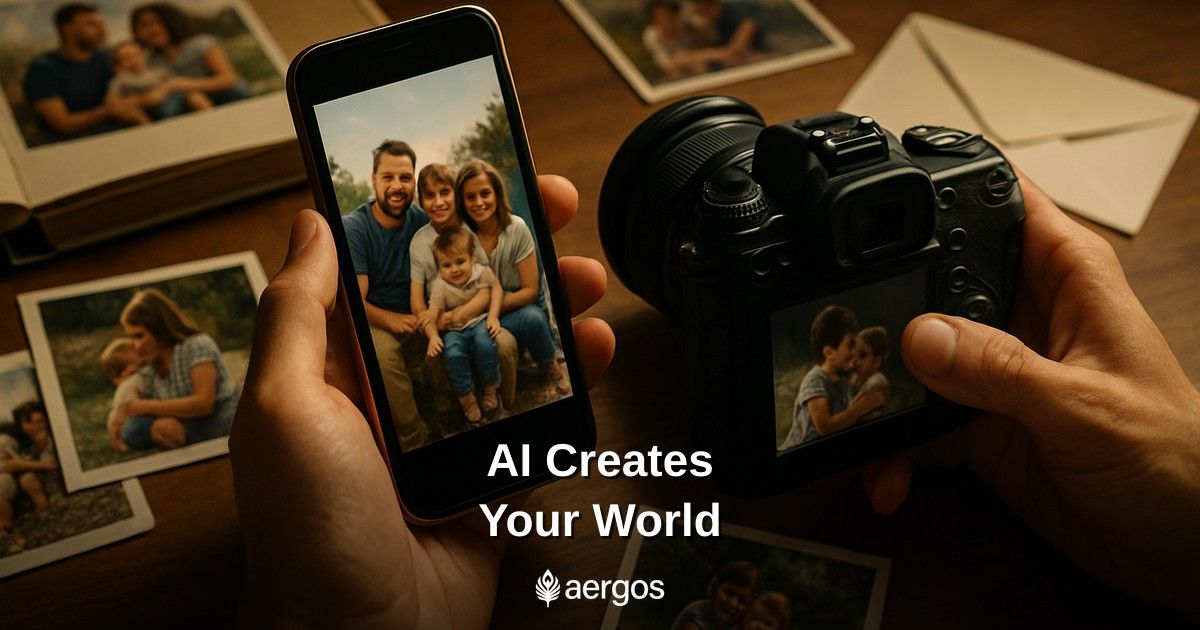
Google announced on June 29, 2026 that all eligible U.S. users can now access deeply personalized image generation inside the Gemini app — for free. According to The Gemini app is bringing personalized image creation to more users., the update connects Gemini's Personal Intelligence feature with Nano Banana and Google Photos, allowing the app to pull real context from your connected Google tools to generate images that actually reflect your life.
The practical upshot is a much shorter distance between what you want and what you get. Instead of writing a detailed prompt that describes your home style, your face, your taste in decor, Gemini does the inferring for you. Simple prompts like 'design my dream house' or 'create an illustration of me and my favorite things' now work because the app already knows you — with your permission.
This is a meaningful step in the broader race to make generative AI tools feel less like a blank canvas and more like a genuine assistant. And for anyone working in content, marketing, or SEO, it's worth paying close attention.
The Details: What Google Actually Announced
Personal Intelligence isn't new, but this expansion is. The feature was already designed to make Gemini feel tailored to you by pulling from connected Google services like Gmail, Google Photos, YouTube, and Search. What's new is the direct connection between Personal Intelligence, Nano Banana, and Google Photos — specifically for image generation.
According to Google's announcement, Gemini can now pull actual images of you from Google Photos. That means you no longer need to manually upload a photo before asking the app to include you in a generated image. The app surfaces the right context automatically.
Google was clear that this is opt-in. Connecting your apps to Gemini is something you control through your settings, and you can adjust or revoke access at any time. Eligibility requirements were not fully detailed in the announcement — Google pointed to a separate eligibility page for that.
Here's a quick look at what the update enables:
- Personalized image generation using context from Gmail, Google Photos, YouTube, and Search
- Simple, natural-language prompts that don't require lengthy personal descriptions
- Automatic inclusion of your own photos from Google Photos without manual uploads
- Full user control via opt-in settings, adjustable at any time
- Available now to all eligible U.S. users for free
What This Means For You
Picture this: you're an in-house marketer or agency owner trying to explain to a client why AI-generated content needs to feel personal to work. This announcement is your clearest proof point yet. Google isn't building a smarter image generator. It's building a system that knows the user well enough to skip the prompt engineering entirely.
That's a significant shift. The barrier to generating usable, personalized visual content just dropped for millions of everyday users. And when everyday users can do this easily, their expectations for every brand interaction go up accordingly.
From a content strategy angle, a few things stand out. First, the days of long, over-specified AI prompts are numbered. Tools that require you to describe yourself in detail are going to feel clunky compared to assistants that already know you. Second, Google is deepening the integration between its ecosystem of apps and its AI layer — which means content that lives inside Google's orbit (your Google Business Profile, your YouTube presence, your site as indexed by Search) becomes more relevant to how AI understands and represents brands. Third, personalization at this level sets a new benchmark for what 'relevant' means in AI-generated output.
For SEO specifically, the bigger question is what this signals about AI Overviews and generative search. If Google is training users to expect deeply personalized AI responses across creative tasks, it's reasonable to expect that same personalization logic to bleed into search results over time. Your content strategy should already be thinking about this. Generic, audience-agnostic content is going to struggle to compete in a world where the AI knows what each user actually cares about.
What to Do Now
This isn't a drop-everything moment, but it is a signal worth acting on. Here's where to focus your energy in the next 30 to 60 days.
- Audit your Google ecosystem presence. If Google's AI is pulling context from Gmail, Photos, YouTube, and Search to serve users, your brand's presence across those surfaces matters more than ever. Prioritize your Google Business Profile, YouTube channel, and any structured data that helps Google understand what you do and who you serve.
- Start testing Gemini's personalized features yourself. If you're eligible, opt in and run creative prompts. Understanding how the tool interprets context from connected apps will make you a better advisor to your clients — and a sharper prompter when you use it for content work.
- Reassess your AI content strategy for specificity. Generic prompts get generic results. The future of AI-assisted content is contextual and specific. Build prompt frameworks that encode your brand's voice, audience, and intent — don't rely on broad instructions and hope the AI fills in the gaps.
- Brief your clients on personalization expectations. Users who experience this level of personalization from a free tool will expect more from branded content. Now is the time to have the conversation about content depth, audience segmentation, and what 'relevant' really means in 2026.
- Monitor how Google integrates personalization into search responses. Keep an eye on AI Overview behavior for queries where personalization might shift what gets surfaced. Tools that track AI visibility alongside traditional rankings will help you spot the patterns early.
Background and Context
Google's push toward a more personalized AI assistant has been building for a while. Personal Intelligence itself was designed from the start to make Gemini feel like an assistant who knows you — not just a text box that returns results. The connection to Google Photos and other apps is a natural extension of that vision.
This also fits into the broader pattern we've seen across the AI landscape in 2025 and into 2026: the shift from general-purpose large language models toward AI systems that have persistent context about individual users. OpenAI's Memory feature in ChatGPT, Apple's on-device intelligence in iOS, and now Google's cross-app personalization in Gemini are all pointing in the same direction. The competition is no longer just about which model is smarter — it's about which assistant knows you best.
For search marketers, that's the part worth watching. I've seen plenty of algorithm shifts that felt seismic in the moment but were really just acceleration of trends already in motion. This is one of them. Personalization has been a part of Google's ranking philosophy for years. What's changing is the speed and visibility of it — and the fact that users are now experiencing it directly, not just passively receiving it in their search results.
If you're already using Aergos to track your AI visibility tracking alongside organic rankings, you're set up to catch early signals when this kind of personalization logic starts influencing what your target audience actually sees in search.
The bottom line: Google just made its AI assistant feel more human for a lot of users. Your job is to make sure your brand feels equally relevant to the version of Google that now knows exactly who it's talking to.
Frequently Asked Questions
Related Articles

Glossary terms in this article
Brush up on the definitions.
Google's free business listing tool that manages how a business appears in Google Search and Maps, including the Local Pack.
Content produced by AI language models, subject to Google's quality standards regardless of production method — quality and helpfulness determine ranking, not the tool used.
The practice of crafting inputs to AI language models to produce desired outputs reliably and accurately.
The planning, development, and management of content to achieve specific business goals across all channels and formats.
A standardised format for providing information about a page and classifying its content so search engines can better understand it.
The extent to which a brand's content is referenced, cited, or surfaced in AI-generated answers from tools like ChatGPT, Gemini, and Perplexity.
About Matt Weitzman
Senior SEO Strategist & Co-Founder
Matt has over 15 years of experience in technical SEO and digital marketing. He specializes in algorithmic recovery, enterprise architecture, and leveraging AI for content scaling. He is a frequent speaker at search marketing conferences.
More articles by Matt Weitzman