SpaceXAI Launches Grok Bot: An AI Agent That Works Like a Teammate

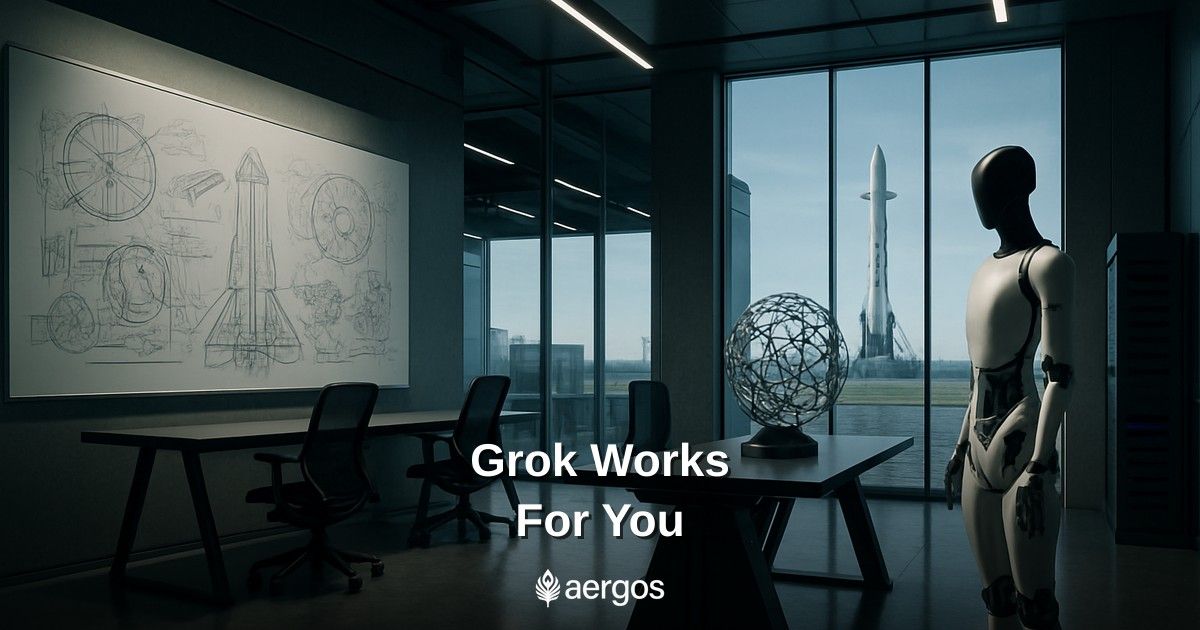
SpaceXAI launched Grok Bot on August 12, 2026 — an always-on AI agent service that operates like an independent teammate, signing into your existing apps and tools to complete multi-step work on your behalf. According to Grok is now an AI 'teammate' you can assign work, the bots run inside their own cloud-based computer environment and only resurface when a task is finished or something needs your sign-off.
The launch puts SpaceXAI squarely in competition with OpenAI's ChatGPT Work, Anthropic's Claude Cowork, and Microsoft's Copilot Tasks — all of which are chasing the same idea: AI that doesn't just answer questions but actually ships work. The Verge reports that Grok Bot builds on an internal prototype SpaceXAI was already using for sales outreach, marketing, office operations, and bug fixes inside the company.
The Details: How Grok Bot Actually Works
The pitch is straightforward. You message a Grok Bot like you'd message a coworker — from your phone or desktop — and assign it a task. No need to pre-build workflows or set up automations. The bot figures out the steps, logs into the relevant tools with your credentials, and gets to work.
Multiple bots can run in parallel. One bot can even manage other bots, each handling its own specialized slice of a bigger project. According to The Verge's reporting, the bots can independently message each other to share context when their work overlaps, and can be placed inside a group chat environment to coordinate tasks and assign ownership on their own.
The system also has memory. Grok Bots learn and save your existing workflows, retain context about how you like things done, and preserve what SpaceXAI calls your "personal voice." They can pick up dropped conversations, return to old threads, and — over time — become proactive enough to start work before you think to ask.
As of today, Grok Bot is available in beta on desktop and iOS for SuperGrok Heavy, Cursor Ultra, and Cursor Teams Premium subscribers. Teams and enterprise users can join a waitlist for future access, per SpaceXAI.
What This Means For You
Here's the honest reality: if you run an agency or an in-house SEO team, this category of tool is coming for a big chunk of what junior staff and coordinators do today. Reporting pulls, outreach follow-ups, task handoffs, content briefs — these are exactly the kinds of multi-step, tool-hopping workflows that AI agents are designed to absorb.
That's not a doom headline. It's an opportunity. The teams that figure out how to direct these agents well — giving them clear goals, sensible guardrails, and smart checkpoints — are going to do more with fewer hours. The ones who ignore the category will just end up doing the same work slower than competitors.
The account access question is one you can't hand-wave. Grok Bot signs into your apps and tools on your behalf. That's a real trust decision, not just a checkbox in an onboarding flow. Before you put an AI agent anywhere near client accounts, paid media dashboards, or CMS logins, you need clear internal policies about what it can touch and what it can't.
For SEO specifically, the multi-agent coordination angle is worth watching closely. The idea that one bot manages others — each handling a specialized task — maps almost perfectly onto how a content pipeline works: research, brief, draft, optimize, publish, report. If these systems mature the way SpaceXAI is describing, the "who does what" question inside your team is going to look very different eighteen months from now.
What to Do Now
- Audit what your team actually spends time on this week. List every repeating, multi-step task that involves switching between tools. That list is your AI agent roadmap — whether Grok Bot, a competitor, or whatever ships next.
- Set a credential policy before you experiment. Decide which accounts you're comfortable delegating access to and which are strictly off-limits. Formalize it in writing, even if it's just a one-page internal doc.
- Get on the waitlist if you manage a team. SpaceXAI is accepting waitlist signups for teams and enterprise users. You want early access so your team has time to build good habits before this becomes standard.
- Watch how the parallel agent model develops. The ability to run multiple bots with one managing the others is the most interesting capability here for agency workflows. Follow SpaceXAI's updates as the beta evolves.
- Don't stop there. OpenAI's ChatGPT Work, Anthropic's Claude Cowork, and Microsoft's Copilot Tasks are all live competitors. Test more than one. Your best-fit agent platform depends on what your stack looks like — not which one got the most press.
Background and Context
The race to build "agentic" AI — systems that take actions in the real world, not just generate text — has been accelerating across every major AI lab. OpenAI, Anthropic, Google, and Microsoft have all been shipping versions of this idea in 2025 and into 2026. Grok Bot is SpaceXAI's structured answer to that competitive pressure.
What makes this launch a little different is the grounding in internal use. SpaceXAI claims Grok Bot isn't a concept demo — it was already handling sales, marketing, and operations work inside the company before today's public release. I've seen plenty of AI product launches built on beautiful slide decks and thin real-world validation. An internal prototype with actual business use cases is at least a more honest starting point.
And yes, the account access model is going to be the thing that slows enterprise adoption more than anything else. Security and compliance teams at large organizations don't move fast when credentials are involved. That's not irrational caution — it's the right question to be asking. The vendors that build the most transparent, auditable permission models will win enterprise deals. The ones that bury it in fine print won't.
For agencies and SMBs, the permission bar is lower and the speed advantage is real. If you can move on this thoughtfully — clear scope, clear guardrails, clear owner — you'll gain meaningful capacity without a proportional headcount increase. That's the actual opportunity here.
If you're already using AI visibility tracking to monitor where your brand and content show up in AI-generated answers, Grok Bot's expansion is another signal that the AI ecosystem is becoming a full operating layer — not just a research shortcut. Staying visible inside these systems, and understanding how they retrieve and cite content, matters more each month.
Frequently Asked Questions
Related Articles

Glossary terms in this article
Brush up on the definitions.
The extent to which a brand's content is referenced, cited, or surfaced in AI-generated answers from tools like ChatGPT, Gemini, and Perplexity.
The practice of anchoring a language model's output to verified external sources rather than relying solely on what the model "remembers" from training.
An autonomous AI system that uses a language model to plan and execute multi-step tasks — calling tools, APIs, and other models — to achieve a goal without step-by-step human direction.
The AI research company behind GPT-4, ChatGPT, and the DALL-E image generation models that have defined the modern generative AI era.
About Matt Weitzman
Senior SEO Strategist & Co-Founder
Matt has over 15 years of experience in technical SEO and digital marketing. He specializes in algorithmic recovery, enterprise architecture, and leveraging AI for content scaling. He is a frequent speaker at search marketing conferences.
More articles by Matt Weitzman